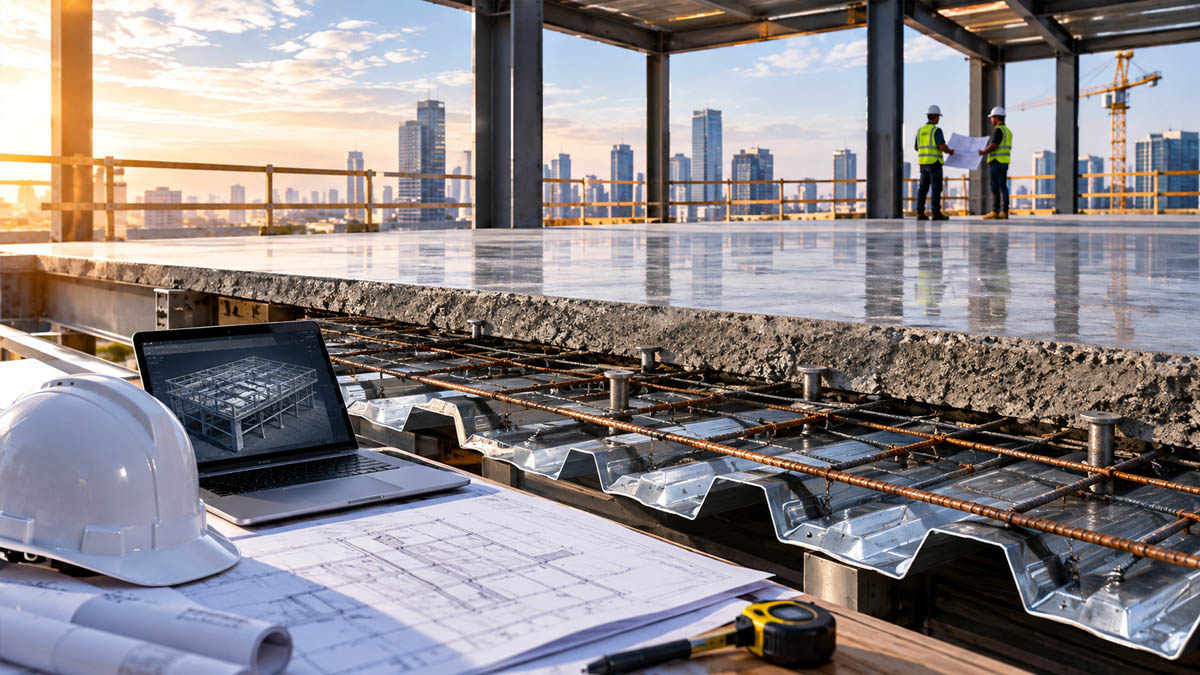
In modern commercial and high-rise construction, structural efficiency is everything. Engineers are constantly searching for floor systems that offer high load-bearing capacity, rapid installation, and minimal structural weight.
One system stands out as the industry standard for multi-story steel-framed buildings: composite concrete floors.
By combining the distinct physical strengths of two fundamentally different materials—concrete and structural steel—composite slabs create a floor system that is far stronger, stiffer, and lighter than either material could achieve on its own.
Here is a breakdown of the engineering principles, mechanics, and design advantages behind composite concrete floors.
1. The Core Engineering Principle: Synergy of Tensile and Compressive Strengths
To understand composite design, you must first understand the fundamental strengths and weaknesses of concrete and steel.
- Concrete excels at handling compression (pushing forces), but it is inherently weak in tension (stretching forces).
- Steel excels at handling tension, but thin steel plates can buckle under heavy compression.
When a floor slab bends under a load (such as furniture, people, or machinery), the top half of the slab undergoes compressive stress, while the bottom half experiences tensile stress.
A composite floor places concrete at the top to absorb compression and a profiled steel deck at the bottom to take on tension. By locking these two materials together, engineers create a unified structural element where each material works purely in its area of maximum strength.
2. The Profiled Steel Decking: Formwork and Reinforcement
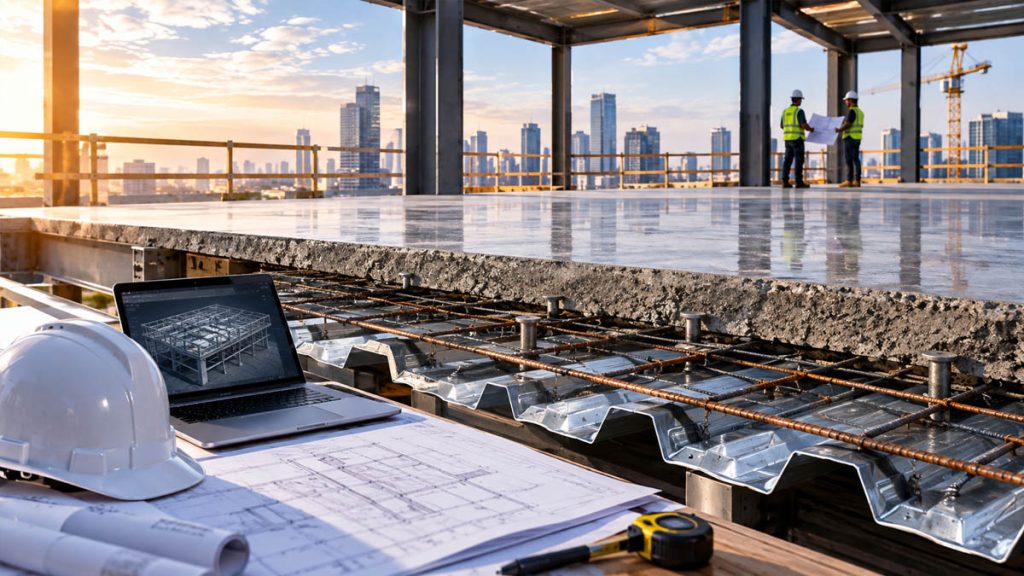
The foundation of a composite floor is the profiled steel deck. Made from cold-formed galvanized steel, this trapezoidal or re-entrant sheeting plays a dual role throughout the construction lifecycle.
During the initial build phase, the steel deck acts as permanent formwork. It supports wet concrete, construction equipment, and workers without requiring temporary wooden shoring underneath.
Once the concrete cures, the deck transforms into the primary tensile reinforcement. The steel deck features cold-rolled embossments (ribs or dimples) along its surface. These physical indentations grip the hardening concrete, preventing horizontal slipping between the steel and concrete interface under bending loads.
3. The Role of Shear Connectors (Head-Stud Welds)
Simply placing concrete on top of steel beams does not automatically make the system “composite.” Without a mechanical connection, the concrete slab and the underlying steel beam would slide independently when loaded, leading to severe deflection.
To force the beam and slab to act as a single composite unit, engineers use shear connectors—typically headed steel studs welded through the deck directly onto the top flange of the steel beam.
These studs resist the longitudinal shear forces generated at the interface between the concrete and steel. By preventing horizontal slip, shear studs force the concrete slab to act as a wide top flange for the steel beam beneath it. This dramatically increases the beam’s stiffness and load capacity without adding extra steel tonnage.
4. Crack Control and Fire Reinforcement: Welded Wire Mesh
While the steel deck handles sagging tensile forces, the top layer of concrete still requires secondary reinforcement.
Engineers specify a layer of welded wire mesh (or structural fibers) placed within the upper zone of the concrete slab. This mesh serves two critical engineering functions:
- Shrinkage & Temperature Control: It prevents micro-cracks from forming as the concrete cures and dries, as well as during normal thermal expansion and contraction.
- Fire Resistance: In a fire event, the thin steel deck exposed on the underside may lose strength as temperatures rise. The embedded mesh provides continuous tensile capacity to ensure structural integrity for a specified fire rating (typically 1 to 2 hours).
5. Structural Advantages of Composite Floor Systems
Engineers frequently select composite concrete floors over traditional cast-in-place slabs because of their technical and economic advantages:
- Reduced Structural Weight: Because the steel deck provides structural strength, the overall slab depth can be reduced (typically 100mm to 150mm thick). A lighter floor means reduced loads on columns, shear walls, and foundations.
- Increased Spans: Composite action allows floors to span longer distances between support beams without requiring intermediate columns, creating flexible, open-plan interior spaces.
- Vibration Damping: The mass of the concrete combined with the composite stiffness provides high natural frequency damping, preventing uncomfortable floor vibrations caused by foot traffic.
- Speed of Installation: Large sheets of lightweight deck can be laid rapidly by hand, creating a safe working platform across multiple stories simultaneously before concrete is pumped.
6. Critical Design Considerations for Structural Engineers
Designing a composite concrete floor requires balancing several structural variables under building codes like Eurocode 4 or AISC:
- Construction Stage Loading: Checking that the bare steel deck can support the weight of wet concrete and workers without excessive deflection before the concrete hardens.
- Propping vs. Unpropped Construction: Deciding whether temporary supports are needed under the deck during pouring to achieve longer spans without sagging.
- Slab Diaphragm Action: Ensuring the completed composite floor acts as a rigid horizontal diaphragm that transfers lateral loads (wind and seismic forces) safely to the building’s core walls and bracing systems.
A Masterclass in Material Efficiency
Composite concrete floors represent composite engineering at its best: optimizing material behavior to achieve maximum structural performance with minimal material waste. By making steel and concrete work as an integrated team, engineers deliver lighter, stiffer, and more sustainable floors capable of supporting the modern built environment.