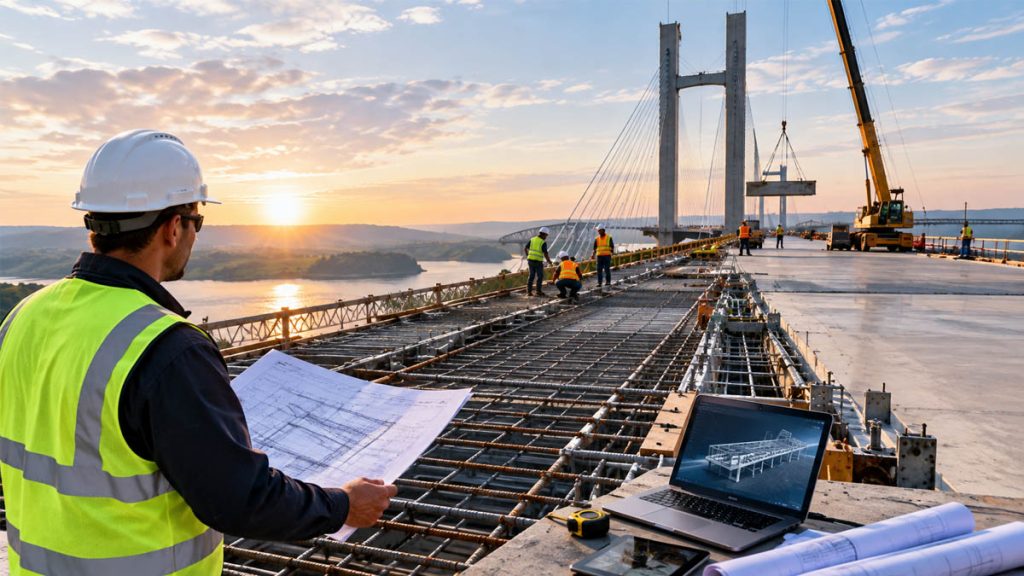
Building sites are inherently chaotic environments. Coordinating hundreds of specialized sub-contractors, managing heavy machinery, tracking material shipments, and interpreting complex blueprints create a high-risk matrix where miscommunication leads to costly delays.
However, modern field-level technology is streamlining these operations. By replacing manual tracking, paper documentation, and reactive decision-making with automated digital workflows, tech solutions are transforming job sites into predictable, streamlined assembly zones.
Here is how modern construction technology actively strips complexity off the physical job site.
1. Eliminating Design Ambiguity via 4D and 5D BIM
Traditional 2D paper blueprints require site managers and trade workers to mentally translate flat drawings into physical structures. This translation frequently leads to errors, spatial collisions, and architectural misunderstandings.
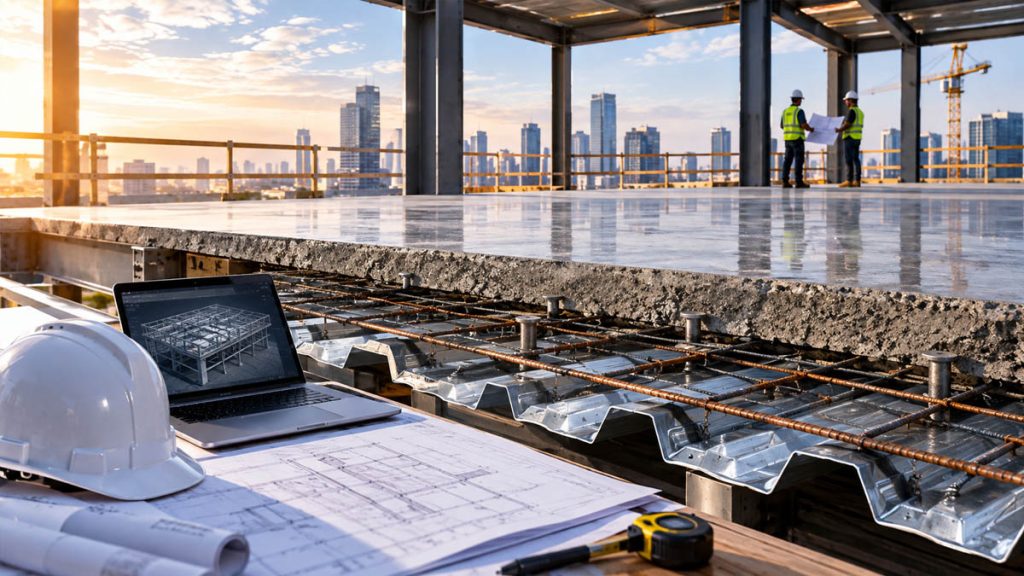
Advanced Building Information Modeling (BIM) elevates standard 3D visual models into 4D (adding time schedules) and 5D (adding cost data). Field crews using mobile tablets or site kiosks can view exact 3D spatial relationships down to the millimeter before installing structural elements, eliminating site-level guesswork.
2. Augmented Reality (AR) for Instant Field Verification
Matching constructed reality against architectural plans used to involve tape measures, spirit levels, and lengthy manual inspections.
Today, job site supervisors equip AR-enabled tablets or smart helmets that project digital BIM models directly onto the physical environment in real time. Workers can look at a blank wall and instantly see where internal electrical conduits, plumbing pipes, or HVAC ducts are intended to go. This eliminates layout friction and catches installation drift before concrete is poured or drywalls are sealed.
3. Connected IoT Networks for Automated Asset and Material Tracking
A major source of daily site complexity is logistics management: locating misplaced tools, tracking rental machinery, and verifying material deliveries.
IoT (Internet of Things) sensors, smart tags, and GPS trackers turn physical assets into self-reporting data points. Site managers can open an app and immediately view the real-time position and operational status of every excavator, generator, and pallet of materials. Automated inventory management eliminates unproductive hours spent searching for equipment.
4. Robotic Layout Tools Replacing Manual Surveying
Setting out floor plans on a raw concrete deck traditionally requires small teams of surveyors using chalk lines, tape measures, and total stations—a slow process prone to human error.
Modern construction sites deploy autonomous field-printing robots. Linked directly to CAD or BIM digital files, these compact robots navigate raw slabs independently, printing wall tracks, plumbing penetrations, and electrical outlets directly onto the floor with laser precision. What once took days of painstaking manual labor is completed in hours with zero ambiguity.
5. Drones for Autonomous Overhead Site Progress Audits
Navigating a massive multi-acre job site to assess daily progress is time-consuming and often inaccurate.
Equipped with high-definition cameras and LiDAR sensors, automated drone flights capture detailed site imagery in minutes. Computer vision software processes these aerial scans, automatically comparing physical progress against project timelines. Managers receive instant notifications if earthwork volumes fall behind or if framing progress strays from the master schedule.
6. Centralized Cloud Platforms Connecting Field to Office
Historically, field crews operated on outdated physical prints while project engineers updated digital models in distant offices, creating a disconnect that led to outdated installations.
Cloud-based site management software establishes a single source of truth. When an architect approves a Request for Information (RFI) or alters a detail in the office, the update synchronizes instantly across every field worker’s mobile device. This synchronization eliminates the risk of teams working off obsolete revisions.
7. AI-Powered Predictive Safety and Risk Analytics
Managing site safety usually involves reactive responses to incidents or near-misses. Artificial intelligence changes this by introducing predictive risk management.
AI algorithms process data streams from site cameras, wearable worker tags, and environmental sensors to detect high-risk scenarios before accidents occur. The system alerts safety managers if workers enter heavy-equipment zones without proper PPE, or if weather conditions create hazardous working parameters. Automating safety oversight drastically reduces administrative stress and site incidents.
Simplicity Through Integration
Construction technology does not attempt to change the physical reality of building—structures still require steel, concrete, and skilled human craftsmanship. Instead, technology systematically strips away the noise, confusion, and friction surrounding execution. By turning unpredictable field variables into manageable digital data, construction technology ensures that building sites run faster, safer, and infinitely more efficiently.