For thousands of years, humans have relied on concrete to build their world. From the colossal dome of Rome’s Pantheon to the towering skyscrapers that define today’s city skylines, concrete has served as the literal foundation of human civilization. Yet, for a material that seems so permanent and unchanging, concrete is undergoing a silent revolution.
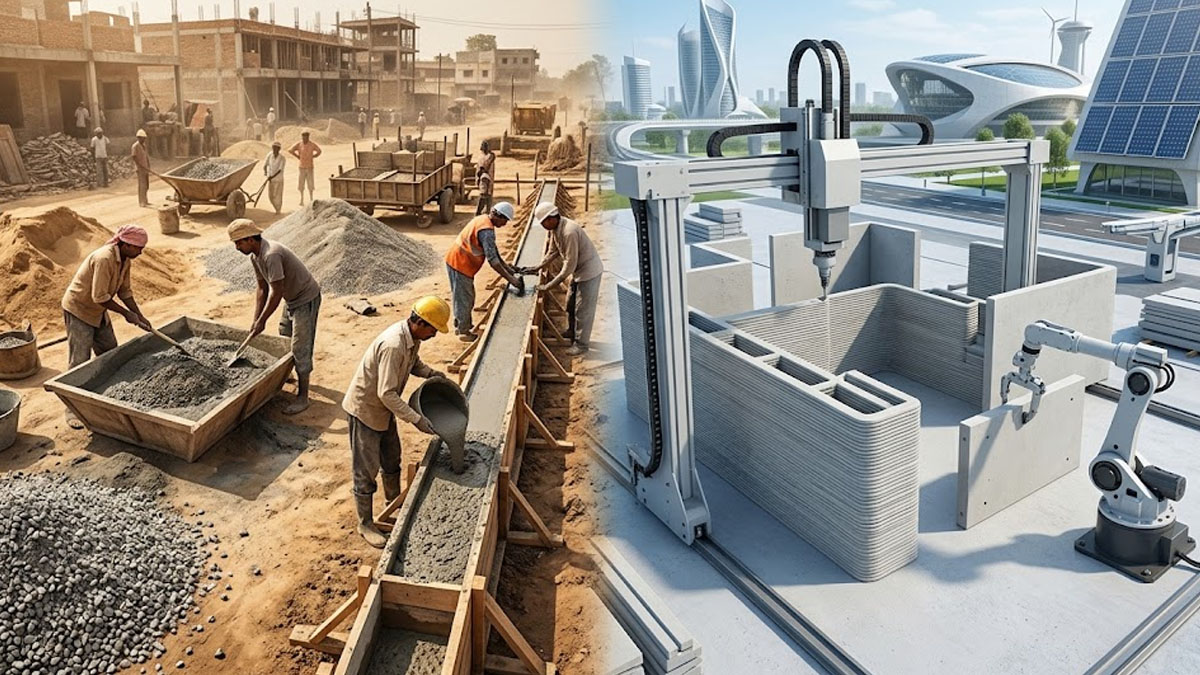
The way we mix, pour, and structure concrete today bears little resemblance to the labor-intensive practices of just a few decades ago. Driven by demands for faster build times, extreme durability, and urgent environmental sustainability, the construction industry is pushing concrete into a bold new era.
The Ancient Roots of Heavy Foundations
long before industrial machinery existed, ancient civilizations recognized the unmatched strength of binding aggregate materials. The Romans perfected an early form of concrete using volcanic ash, quicklime, and seawater. Remarkably, many of their harbor structures remain intact today, proving that ancient builders understood long-term durability long before modern chemistry came along.
However, after the fall of the Roman Empire, the technique was largely lost for centuries. It wasn’t until the 18th and 19th centuries that researchers rediscovered lime-based mortars, culminating in the invention of Portland cement—the precursor to modern concrete.
The Breakthrough: Reinforced Concrete and Mass Production
The true turning point for modern architecture came with the invention of reinforced concrete in the late 19th century. Plain concrete is exceptionally strong under compression (pushing force), but weak under tension (pulling or stretching force).
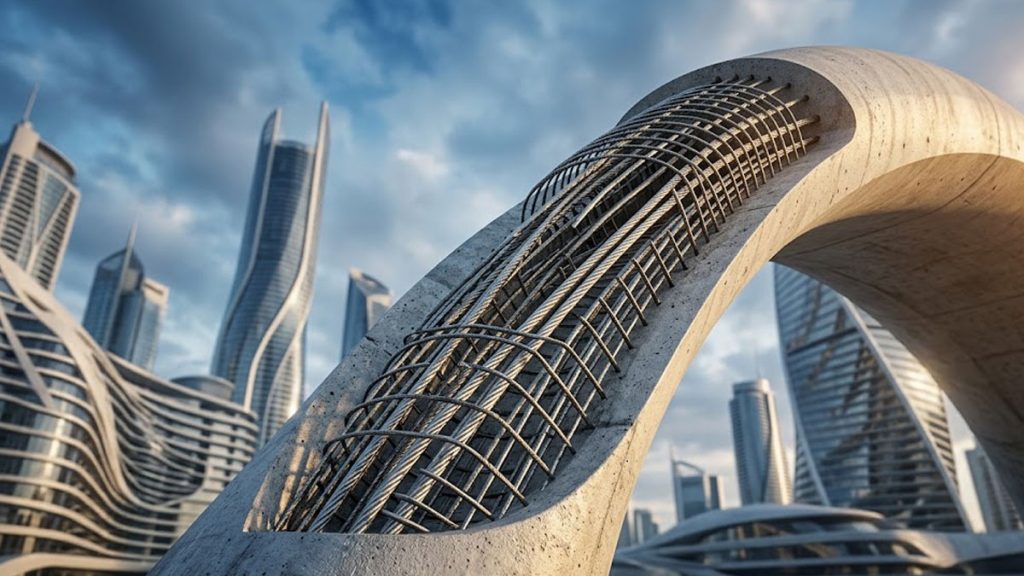
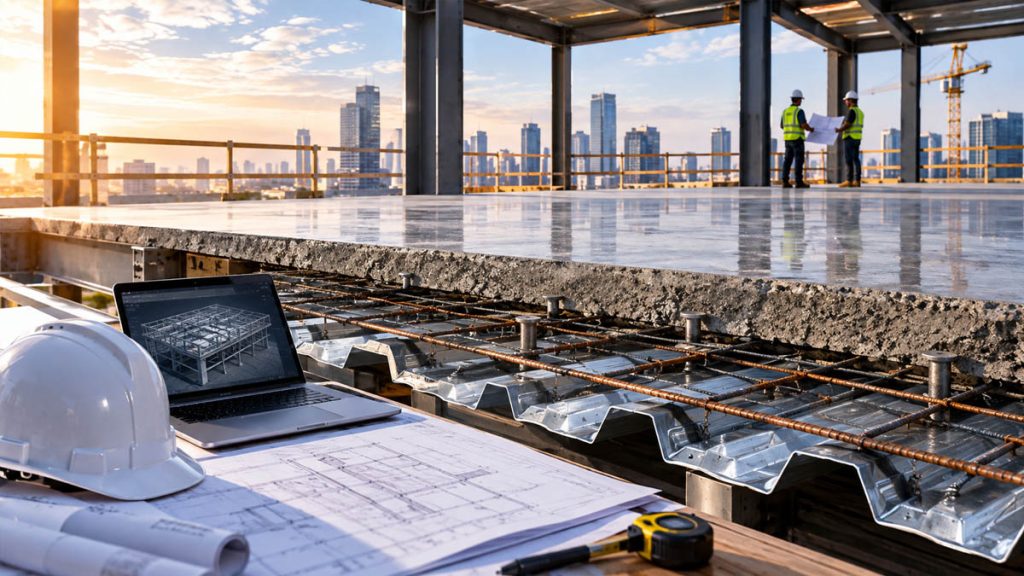
By embedding steel rebar inside the concrete matrix, engineers unlocked a super-material capable of withstanding both compressive and tensile forces. This innovation fundamentally changed structural engineering:
- Vertical Architecture: High-rise buildings could finally expand upward without requiring excessively thick ground-level walls.
- Complex Infrastructure: Long-span bridges, arched dams, and underground transportation networks became technically feasible.
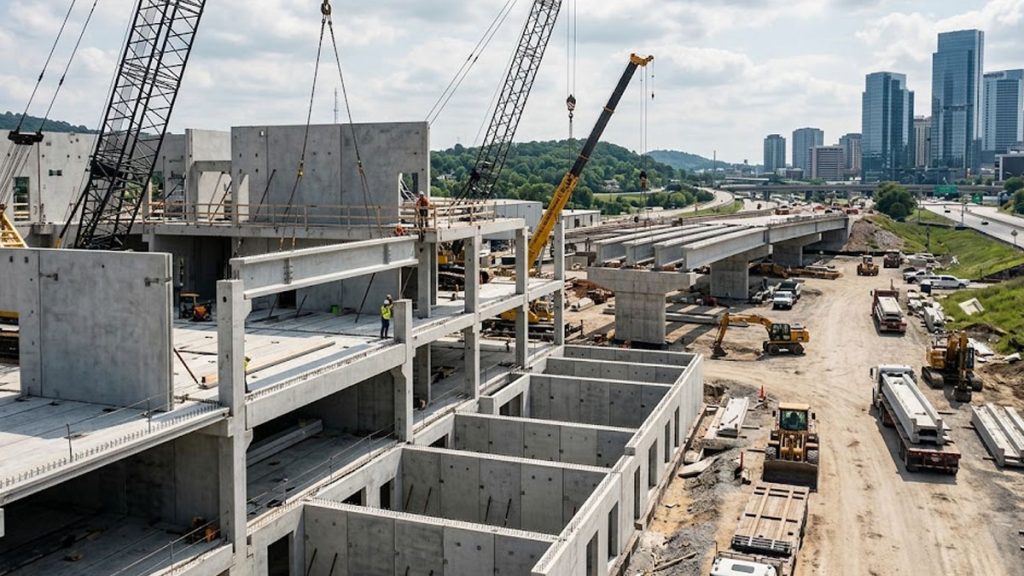
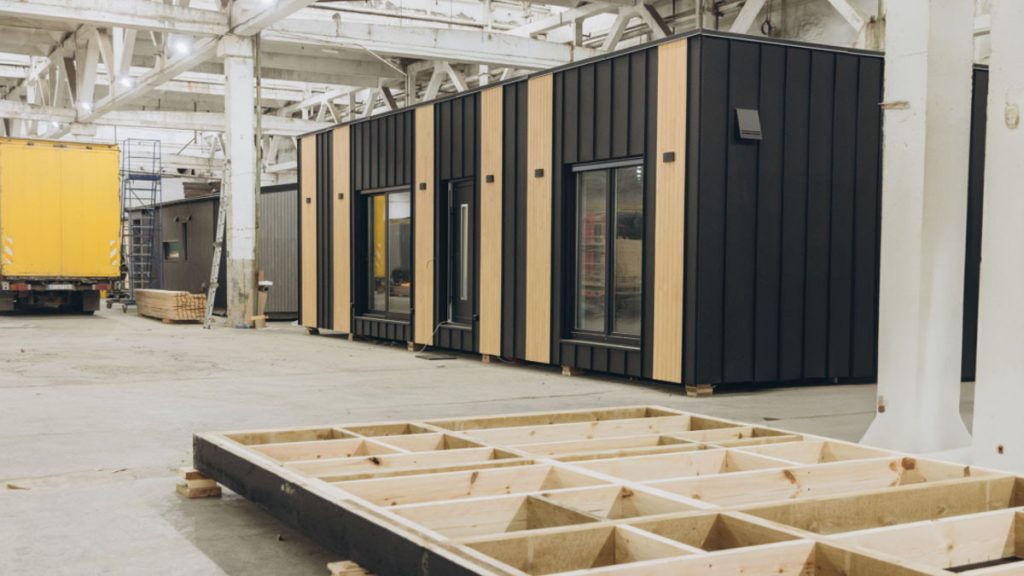
- Precast Manufacturing: Components could be manufactured in controlled factory conditions and transported to job sites, reducing weather-related delays.
The Modern Era: Smart Concrete and Advanced Engineering
Today, the construction sector is moving away from generic concrete mixes in favor of highly specialized, high-performance materials engineered at the molecular level.
Ultra-High-Performance Concrete (UHPC)
Featuring ultra-dense particle packing and high-strength fibers, UHPC offers compressive strengths up to five times greater than standard concrete. It allows architects to design thinner, lighter, and more elegant structures without sacrificing safety or structural integrity.
Self-Healing Concrete
One of concrete’s greatest weaknesses is its tendency to crack over time, allowing water and corrosive agents to degrade internal reinforcement. Modern bio-concrete incorporates microscopic bacterial spores and nutrient capsules into the mix. When moisture seeps into a crack, the bacteria wake up, feed on the nutrients, and naturally secrete limestone (calcium carbonate) to seal the fissure automatically.
Self-Consolidating Concrete (SCC)
traditional concrete requires mechanical vibration to eliminate air pockets and ensure complete coverage around dense rebar networks. SCC flows like heavy liquid under its own weight, filling complex formwork effortlessly while reducing labor costs and site noise.
Digitalization and Automation: 3D Printing the Future
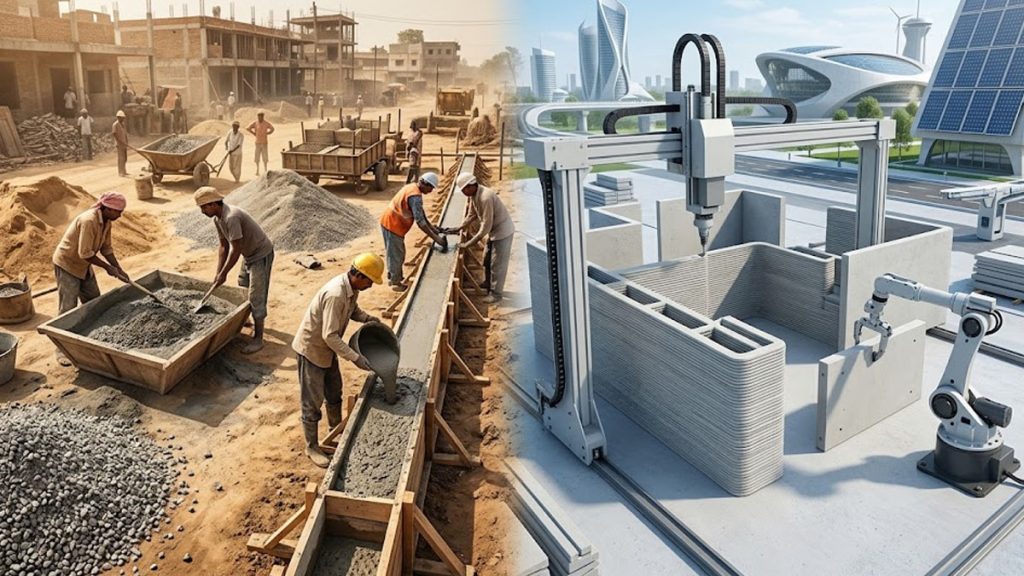
Perhaps the most visually striking evolution in concrete construction is the rise of additive manufacturing, commonly known as 3D concrete printing.
Instead of pouring wet concrete into temporary wooden or steel formwork, gantry-style 3D printers layer specially formulated concrete mixtures precise to millimeter tolerances.
- Speed of Execution: Entire house frames or structural walls can be printed in a matter of days or hours rather than weeks.
- Waste Reduction: Material is deposited only where structurally necessary, significantly reducing job-site material waste.
- Design Freedom: Curved geometries, organic fluid shapes, and customized architectural elements become cost-effective to produce.
The Next Frontier: Green Concrete and Decarbonization
Despite its utility, traditional concrete production carries a significant environmental footprint, accounting for roughly 8% of global carbon dioxide emissions—primarily due to the energy-intensive manufacturing of Portland cement.
The immediate future of concrete construction relies on reducing this footprint:
- Supplementary Cementitious Materials (SCMs): Replacing portions of Portland cement with industrial byproducts like fly ash, slag, or calcined clay.
- Carbon Capture and Sequestration: Injecting captured $CO_2$ during the mixing process, where it mineralizes permanently into the matrix, actually enhancing compressive strength while trapping carbon forever.
- Geopolymer Concrete: Utilizing alternative chemical binders that bypass the traditional cement kiln process entirely, yielding potential carbon reductions of up to 80%.
A Resilient Path Ahead
Concrete is no longer a static, passive block of stone and cement. It has evolved into an active, high-tech material that self-heals, prints digitally, and adapts to environmental demands. As global urban density increases and climate resilience becomes a baseline requirement, the continued evolution of concrete will remain at the heart of how humanity designs the physical world.